

 ChatGPT
 Perplexity
 Claude
 Google AI
What Is a Common Short Code? Shared vs Dedicated, Cost and What to Use Instead
When you text “JOIN” to a five-digit number to enter a contest, that number is a short code. They’re everywhere in text marketing, but the rules around them have changed a lot, especially in the US. Here’s what they are, how the shared and dedicated versions differ, and what most businesses use today.
What is a common short code?
A common short code is a 5- or 6-digit phone number created for high-volume business texting. In the US, short codes are administered by the Common Short Code Administration, and businesses lease them rather than buy them. Leases usually run for three, six, nine or twelve months.
Short codes are popular because they deliver messages faster and people know they are from businesses and not personal numbers.
Dedicated vs shared short codes
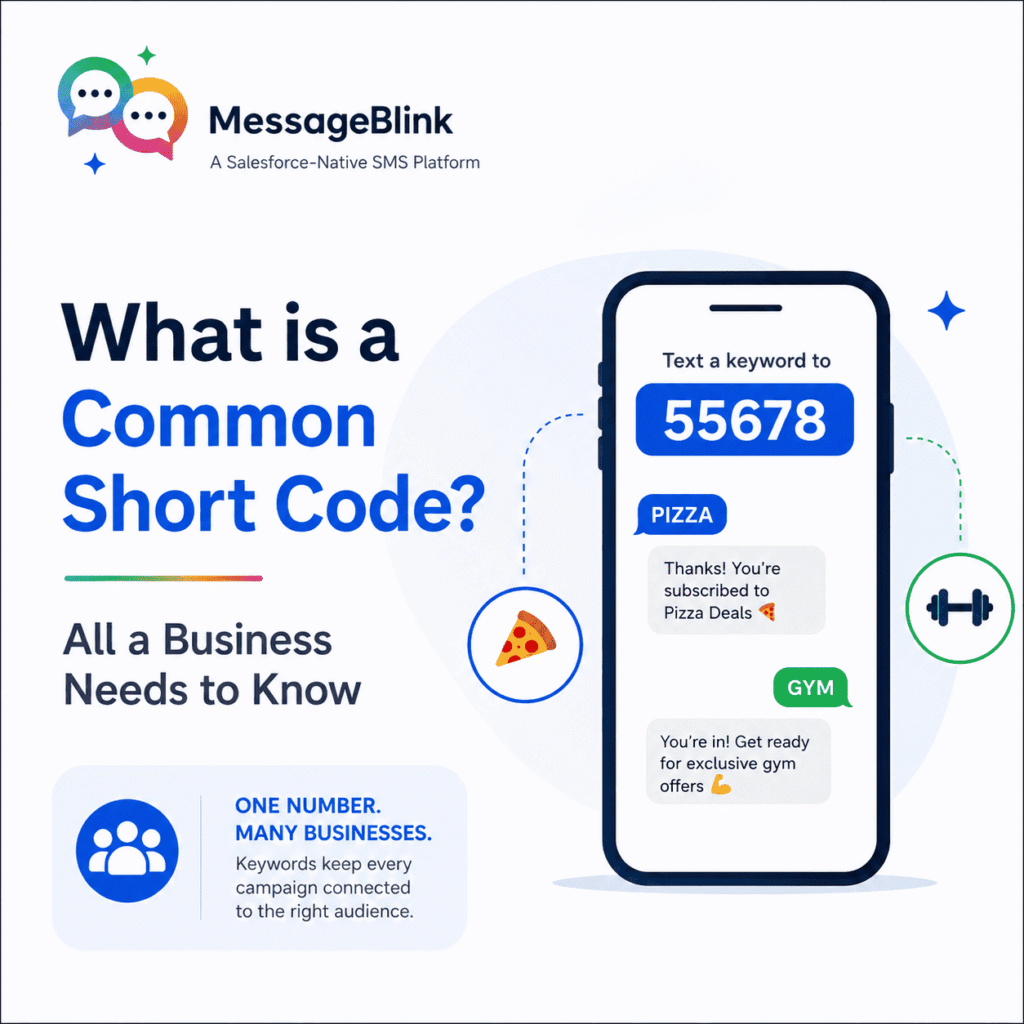
A dedicated short code is leased by a single business for the length of the lease. A shared short code is used by several businesses at once. Each company gets a keyword, and the keyword tells the system which campaign a message belongs to.
For example, if one brand uses PIZZA and another uses GYM on the same number, a text that says PIZZA goes to the pizza campaign.
| Shared short code | Dedicated short code | |
|---|---|---|
| Who uses it | Multiple businesses | One business |
| Keywords | Whatever is still free | Any you’d like |
| Brand recognition | Low | High |
| Cost | Lower | Higher (often $500–$1,000+ a month) |
| Compliance risk | Higher: one sender’s behavior affects everybody | Lower: you control your own traffic |
| US availability | Largely banned by major carriers | Available |
How shared short codes worked
Choose a keyword. The business picked a word like DEALS or VIP.
Register it. The provider registered the keyword to the shared number.
Gather opt-ins. Customers texted the keyword to subscribe.
Route messages. Everything tied to that keyword went to the right business account.
Are shared short codes allowed in the US?
Mostly not. AT&T stopped activating new shared short codes in 2018, and T-Mobile stopped onboarding new ones in 2020. The main problem was that one bad sender could take down a whole shared number and hurt every good business on it.
If you’re texting US customers, plan on one of these instead:
Dedicated short code: for high-volume, time-sensitive campaigns
10DLC (10-digit long code): for standard business messaging, once you’ve registered your brand and campaign
Toll-free number: for medium volume, after verification
Rules vary from country to country, and in some markets shared codes are still on offer. Before you commit, check with your messaging provider and local carriers.
Which option works for you?
| Option | Best suited for | Trade-off |
|---|---|---|
| Dedicated short code | Large campaigns, flash sales, alerts | Most expensive, longest setup |
| 10DLC | Business texts, reminders, follow-ups | Requires registration, less throughput |
| Toll-free | Transactional or support texts at medium volume | Needs verification |
| Shared short code | Non-US markets where still permitted | Few keywords, shared reputation |
Setup times vary. Some providers quote two to four weeks for a short code, while others say it can take two or three months. Ask your provider for a current estimate.
Keyword campaigns are still important
Keyword opt-ins work well for sweepstakes, loyalty programs, and event sign-ups, even with a dedicated number. Use a short, easy-to-spell keyword, and confirm the sign-up with an opt-in message that includes your brand name, message frequency, and “Message and data rates may apply.”
How your number type affects Salesforce teams
The number behind your campaigns affects how fast messages go out, how delivery is tracked, and how opt-outs are handled. If your team works in Salesforce, a native platform like MessageBlink keeps sends, replies, and consent records on the contact record, so you can see what happened with each subscriber. Choose your number type before your first send, since changing later usually means re-registering.