

 ChatGPT
 Perplexity
 Claude
 Google AI
Transactional Model of Communication: A Complete Manual with Flowcharts and Business Examples
Have you ever left a meeting thinking everyone was on the same page and then later found out that half the room thought you meant something totally different? Rarely does such miscommunication stem from one “broken” message. More commonly, it comes from treating communication as one-directional when it is never really one-directional.
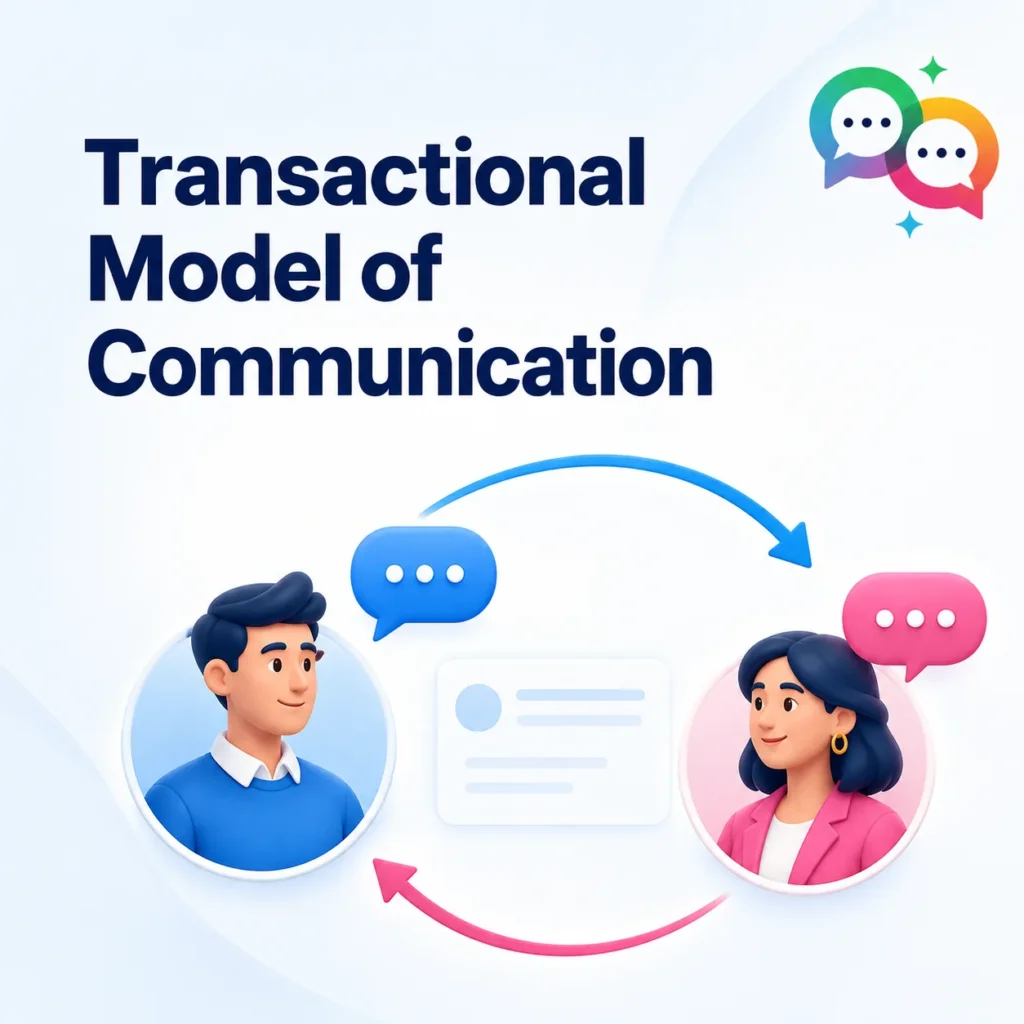
The transactional model of communication fills that gap perfectly. Instead of seeing communication as a message going from Point A to Point B, the transactional model sees any conversation—a team stand-up, a sales call, or a customer support chat—as a continuous, two-way loop where both people are sending and receiving at the same time.
In this guide, you’ll learn what the transactional model of communication really means, how it’s different from older communication theories, the key pieces that make it work, and how it’s played out in real business conversations—with simple flowcharts you can follow visually.
What is the transactional model of communication?
The transactional model of communication is a theory of communication that views conversation not as a one-way transmission but as a simultaneous, continual exchange. In this model, there are no fixed “sender” and “receiver”: each person encodes, transmits, receives, and decodes messages at the same time, responding to nonverbal signals, tone of voice, and shared understandings.
Both people involved are generating a transactional conversation in real-time, not a static announcement or memo. A nod, a pause, a raised eyebrow, or a quick follow-up question is all part of the message itself, and that’s why this model is seen as far more realistic for how people actually communicate with each other, whether that’s in person, on the phone, or through a business messaging platform such as SMS or WhatsApp.
The transactional model of communication is based on one simple idea: communication is a shared responsibility, happening simultaneously, in both directions.
Flowchart: How the Transactional Model Operates
┌────────────────────────┐
│ PERSON A │
│ (sender + receiver) │
└───────────┬─────────────┘
│ message sent
▼
┌────────────────────────┐
│ Shared Channel & │
│ Context (setting) │
│ culture, relationship │
└───────────┬─────────────┘
│ message + non-verbal signals
▼
┌────────────────────────┐
│ PERSON B │
│ (sender + receiver) │
└───────────┬─────────────┘
│ feedback in real time
▼
(loop back to Person A — both people modify their
tone, wording, and body language as the
conversation continues)
Notice there is no real “start point” or “end point”—the arrows form a loop, not a line. The loop is the core characteristic of the transactional model of communication.
Where did the transactional model come from?
Earlier theories of communication have dealt with conversation much more rigidly. The linear model of communication (associated with early theorists such as Shannon and Weaver) showed a sender pushing a message through a channel to a passive receiver—useful for describing something like a radio broadcast, but a poor fit for a two-person conversation.
The interactional model later added feedback to improve on this but still treated sending and receiving as separate, alternating turns—you speak, then I respond, then you speak again.
The transactional model, which is most closely associated with communication scholar Dean Barnlund, went a step further. It argued that in real conversations, people didn’t take turns being a “”receiver”—they were processing and reacting and signaling meaning the entire time the other person was talking. This is why the transactional model of communication is considered the most accurate representation of how business conversations, negotiations, and customer interactions actually happen.
Key Elements of Transactional Model of Communication
To understand why this model is important for business communication, it is useful to break down its key building blocks.
1. Communicators (Simultaneous Sender-Receivers)
Each participant is encoding his own message and decoding the other person’s—at the same time. The rep is in the middle of a sales call, walking through pricing, but also reading the prospect’s hesitation and changing the pitch mid-sentence.
2. Medium and message
Your message is everything you are saying—words, tone, and body language—and the channel is how it is delivered: face-to-face, phone, video call, live chat, SMS, or WhatsApp. The channel encodes the degree of non-verbal nuance.
3. The Feedback Loop
Feedback is not a separate, later step—it’s ongoing, often nonverbally, in nods, tone shifts, facial expressions, or a quick “makes sense” on a call.
4. Noise and Communication Obstructions
Noise is anything that distorts the message—bad phone connections, industry jargon, distractions, and emotional strain. In the transactional model, both people are working together, in real time, to manage and reduce this noise.
5. Background
Every conversation is framed by its physical, cultural, and relational context. A message sent in a team chat channel casually is received very differently than the same message sent in a formal client meeting.
6. Continuity
A transactional conversation does not end neatly—it feeds into future interactions, follow-ups, and ongoing relationships, which is especially relevant in long-term B2B or customer relationships.
Linear, Interactional, and Transactional Models of Communication
Here’s how the three major models of communication compare side-by-side:
| Feature | Linear Model | Interactional Model | Transactional Model |
|---|---|---|---|
| Direction of communication | ✔ One way only | ✔ Two-way but turn-based | ✔ Two way and simultaneous |
| Feedback | ✗ None or very little | ✔ Exists but is delayed | ✔ Immediate and ongoing |
| Role of context | ✗ Seldom considered | ✔ Occasionally considered | ✔ Key to interpretation |
| Nonverbal cues | ✗ Mostly ignored | ✔ Considered somewhat | ✔ Integrated completely |
| Best suited for | ✔ Announcements, memos, broadcasts | ✔ Structured Q&A, surveys | ✔ Meetings, negotiations, live customer conversations |
| Real-time adaptability | ✗ Not available | ✔ Limited | ✔ Always |
That comparison is exactly why the transactional model of communication is considered the gold standard for interactive environments such as customer support chats, live chat, one-on-one meetings, and negotiations where both sides are shaping the outcome in real time.
Transactional Model of Communication: Significance in Business
When the transactional model of communication is applied deliberately, rather than by accident, it tends to yield a few measurable benefits for teams and customer-facing functions:
- Fewer misunderstandings: With both parties actively reading and adjusting in real time, confusion is caught and corrected before it snowballs.
- Better relationships: Ongoing feedback indicates both parties feel heard—which builds trust over time.
- Faster problem solving: Issues are revealed immediately through tone and body language rather than sleeping on them.
- Better decision-making: Decisions are made on a shared understanding, not assumptions, with real-time back-and-forth.
- Lower costly mistakes: In business communication, a misread instruction or missed context can be costly—the transactional model’s constant feedback loop catches these earlier.
Business scenarios: The transactional model of communication in action
When you see theory at work, it’s easier to apply. Here are three common business scenarios, each represented by a simple conversation flowchart.
Scenario 1: Brainstorming with the team
┌────────────────────────────────────┐
│ Team Lead: “What if we did a │
│ referral-based campaign? │
└───────────────┬──────────────────────┘
▼
┌────────────────────────────────────┐
│ Team Member A nods: “That could be │
│ combined with a referral discount │
│ code.” │
└───────────────┬──────────────────────┘
▼
┌────────────────────────────────────┐
│ Team Lead notices engaged body │
│ language, asks follow-up: “How │
“Would we track redemptions?” │
└───────────────┬──────────────────────┘
▼
┌────────────────────────────────────┐
│ Team Member B leans in and proposes. │
│ a tracking idea │
└───────────────┬──────────────────────┘
▼
(Loop continues — every reaction informs
the next question, not just the next answer)
Here, the flow of the brainstorm is shaped in real time by nonverbal engagement, not only spoken suggestions—a textbook example of the transactional model of communication in action.
Scenario 2: Manager-Employee One-on-One
┌────────────────────────────────────┐
│ Manager: “What does the workload │
│ look like this sprint?” │
└───────────────┬──────────────────────┘
▼
┌────────────────────────────────────┐
│ Employee hesitates, tone flattens: │
│ “It’s tight but manageable.” │
└───────────────┬──────────────────────┘
▼
┌────────────────────────────────────┐
│ Manager recognizes the hesitation → │
│ softens tone, asks a direct │
│ follow-up: “What’s the biggest │
│ bottleneck right now?” │
└───────────────┬──────────────────────┘
▼
┌────────────────────────────────────┐
│ Employee opens up with specifics │
└───────────────┬──────────────────────┘
▼
┌────────────────────────────────────┐
│ Manager reiterates what they │
│ heard, provides support │
└──────────────────────────────────────┘
The manager is not just receiving information; the hesitation in tone is part of the message and requires a real-time adjustment in approach.
Scenario 3: Support Chat
┌────────────────────────────────────┐
│ Customer: “I haven’t received my │
│ order, and it’s been 8 days.” │
└───────────────┬──────────────────────┘
▼
┌────────────────────────────────────┐
│ Support agent detects frustration │
│ in message tone → responds with │
│ empathy first, then solution │
└───────────────┬──────────────────────┘
▼
┌────────────────────────────────────┐
│ Customer’s tone softens once │
│ acknowledged │
└───────────────┬──────────────────────┘
▼
┌────────────────────────────────────┐
│ Agent provides tracking update + │
│ a goodwill gesture │
└───────────────┬──────────────────────┘
▼
┌────────────────────────────────────┐
│ Customer confirms satisfaction — │
│ relationship strengthened, not │
│ just the ticket closed │
└──────────────────────────────────────┘
Each reply here is shaped by the previous one — evidence that even asynchronous, text-based conversations follow the transactional model of communication when both sides are fully engaged.
The Transactional Model for Business Messages
The above scenarios don’t just take place face-to-face or on the phone—the same real-time, reciprocal exchange is increasingly playing out over SMS and WhatsApp, particularly in customer service and sales follow-ups. A timely reply, a quick acknowledgment text, or a two-way SMS thread all have the same feedback-loop dynamics as described in the transactional model: both sides are reading tone, urgency, and context and adjusting their next message accordingly.
That’s where tools built for two-way conversation, not one-way blasts, come in. MessageBlink, a Salesforce-native SMS and WhatsApp messaging platform on AppExchange, is designed specifically to support this kind of reciprocal exchange directly inside your CRM: reps and support teams can see the full back-and-forth thread, respond in real time, and keep context attached to every conversation, instead of sending messages into a one-way void.
[See how MessageBlink powers two-way SMS and WhatsApp conversations on Salesforce AppExchange →]
Tips to Avoid Common Mistakes
Even teams that understand the theory behind the transactional model of communication can get caught in a few avoidable traps:
- Assuming a message was understood simply because it was sent
- Ignoring tone or non-verbal cues that contradict the spoken message
- Giving the other person too much information at once
- Incorrect communication style for audience or situation
- Treating a conversation as “closed” instead of ongoing
Actionable Tips for Applying the Transactional Model
- Be here now. Put aside distractions so you can read tone and nonverbal cues in real time, not just words.
- Get honest feedback. Ask open-ended questions. Treat critical feedback as a useful signal, not a problem to avoid.
- Adapt to the situation. A formal client call needs a different tone than a quick internal Slack thread, and so does SMS vs. a scheduled call.
- Close the loop. Follow up after a conversation ends to confirm shared understanding—continuity is part of the model, not an afterthought.
Conclusion
The transactional model of communication changes how we think about conversation; conversation doesn’t happen from one person to another but is built together in real time. By treating communication like this for business teams—whether it’s internal meetings, leadership conversations, or customer support—there will be fewer misunderstandings, stronger relationships, and a quicker resolution when things go wrong.
This principle also applies just as naturally to digital channels. Two-way SMS and WhatsApp conversations, when handled thoughtfully, follow the exact same feedback loop this model describes, which is why the tools you use to manage those conversations matter just as much as the message itself.
[Learn more about MessageBlink for Salesforce-native two-way SMS and WhatsApp messaging →]