


 ChatGPT
 Perplexity
 Claude
 Google AI
480 and 602: Phoenix and Scottsdale’s Two Area Codes
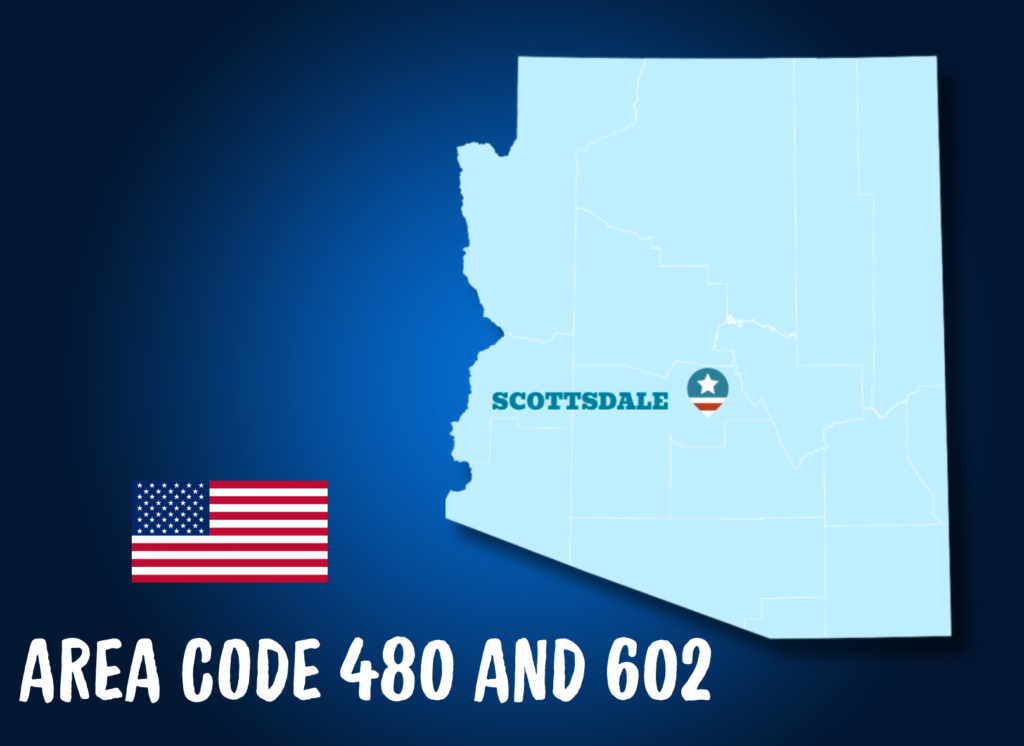
Phoenix and Scottsdale sit close enough together that their phone numbers overlap, but they’re actually served by two distinct area codes with two distinct histories. Here’s how they split, what they cover, and what to know if you’re calling — or dialing out to — either one.
Who covers what
602 area code is the original — one of Arizona’s earliest area codes, and for decades it covered the entire state before growth forced it to shrink down to its current territory: central Phoenix and the immediate downtown core.
480 area code came later, carved out specifically to serve the fast-growing eastern suburbs that 602 area code couldn’t keep up with — Scottsdale, Tempe, Mesa, Chandler, Gilbert, and Fountain Hills. If a number is 480 area code, it’s almost certainly coming from that eastern arc of the Phoenix metro rather than the urban center itself.
Both sit in Mountain Standard Time, and there’s a genuinely useful quirk here: Arizona is one of the few U.S. states that doesn’t observe daylight saving time, so unlike most of the country, a 480 and 602 area code number stays on the same UTC offset year-round — no need to adjust scheduling twice a year for calls or automated texts sent to this region.
Dialing basics
Both area codes require 10-digit dialing for every call, including local ones — just the area code plus the seven-digit number, no leading 1 needed if you’re calling from within Arizona. Calling in from outside the state, add the 1 first.
A sample of the zip codes each code touches, for reference:
| 480 (eastern suburbs) | 602 (central Phoenix) |
|---|---|
| Scottsdale — 85251 | Downtown Phoenix — 85003 |
| North Scottsdale — 85254 | Central Phoenix — 85004 |
| Tempe — 85281 | Midtown Phoenix — 85006 |
| Chandler — 85233 | |
| Mesa — 85204 |
Is a call from either one something to worry about?
Rarely — Phoenix and Scottsdale together make up one of the largest metro economies in the Southwest, spanning healthcare, real estate, tourism, and a growing tech sector, all of which generates a steady stream of legitimate local calling. The risk that does exist here is the same one that exists everywhere: caller ID spoofing, where a scammer’s number displays as local regardless of where they’re actually calling from. Fake IRS notices, utility disconnection threats, and “your account has been compromised” calls are the common scripts nationally, and Arizona sees its share. None of it depends on the specific area code — the tell is always urgency, never the prefix.
Getting a local number for business use
A handful of legitimate providers issue Arizona numbers for businesses that want local presence without a physical office there — Twilio and Vonage are two of the more established ones, alongside various Salesforce-compatible SMS platforms built specifically for CRM integration. (Worth a correction here: SendGrid, sometimes mentioned alongside these, is actually Twilio’s email delivery product — it doesn’t provision phone numbers, so it’s not a real option for this specific use case.)
Once a number is provisioned, Message Blink connects it directly into Salesforce — sending and receiving SMS from a local 480 and 602 area code number without leaving a Lead, Contact, or Case record, with Salesforce Flow available to automate routine follow-ups. For sales and support teams working Phoenix-area accounts, that means a text sent from a recognizable local number lands in the same record a rep is already working from, rather than sitting in a separate app nobody checks consistently.