
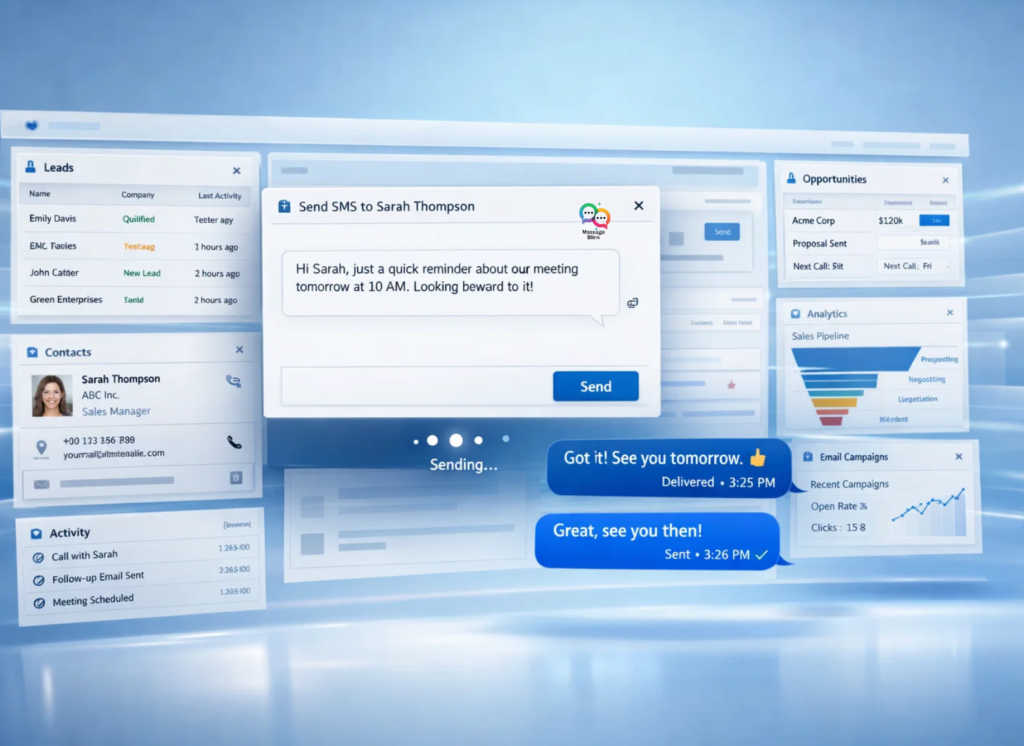
Businesses searching for quick text software that integrates with Salesforce often want a solution that enables seamless communication directly within their CRM environment. Platforms like Message Blink represent a modern approach to Salesforce SMS integration, allowing organizations to send personalized messages, automate outreach, and manage engagement without leaving Salesforce.
As digital engagement expectations continue to rise, selecting the right text messaging software for Salesforce becomes a strategic decision rather than a technical one. The ideal solution should support scalable messaging workflows, bulk texting capabilities, automation compatibility, and centralized communication tracking.
This guide explores how Salesforce teams can evaluate text messaging platforms effectively including the critical features to assess when choosing tools such as Message Blink to support fast, reliable, and CRM-native customer communication.
Key Factors to Consider When Choosing Quick Text Software for Salesforce
Selecting the right SMS messaging app for salesforce requires evaluating operational fit, automation potential, and long-term scalability. Below are the most important decision criteria.
1. Native Salesforce Integration
Native Salesforce texting platforms operate directly within the CRM, ensuring seamless data flow and stronger user adoption across teams.
A truly integrated messaging platform should:
- Allow users to send SMS directly from salesforce lead, contact, or opportunity records without opening external applications an approach used by Salesforce native tools such as Message Blink
- Automatically log conversations to Salesforce timelines so teams maintain full visibility into engagement history
- Support standard Salesforce automation tools like Flows, Process Builder, and campaigns
- Preserve data accuracy by eliminating sync delays or middleware dependency
Native integration reduces complexity and ensures messaging becomes part of the daily Salesforce workflow rather than an isolated activity. Platforms designed to operate natively within Salesforce including Message Blink, 100% Native Salesforce SMS App, demonstrate how embedded communication can improve operational continuity.
2. Messaging Capabilities and Flexibility
Quick texting software should support diverse communication scenarios beyond basic one-to-one messaging. Organizations often require flexibility across departments and campaign types to maintain consistent engagement strategies.
Look for platforms that enable:
- One-to-one conversational messaging for sales follow-ups or support responses
- Bulk SMS messaging from salesforce list views, reports, or campaigns to reach audiences efficiently functionality commonly evaluated in solutions like Message Blink
- Message scheduling to avoid dark hours
- Template creation for consistent communication and faster execution
- Merge field personalization so messages dynamically include customer details
These capabilities ensure the software can support engagement initiatives across marketing, sales, and customer success teams without workflow limitations. Flexible messaging environments help organizations scale communication without fragmenting processes.
3. Automation and Workflow Compatibility
Automation transforms texting from manual outreach into a scalable engagement engine. Without automation support, messaging remains time-intensive and inconsistent, especially in data-driven CRM environments.
Effective solutions should allow organizations to:
- Trigger messages automatically when Salesforce record fields update
- Send appointment reminders or status alerts based on lifecycle milestones
- Launch campaign sequences targeting segmented audiences
- Integrate messaging actions directly within Salesforce Flows a capability often assessed when reviewing Salesforce-native tools like Message Blink
Automation compatibility ensures messaging adapts to operational growth while maintaining consistent customer experiences across engagement touchpoints.
4. Reporting and Engagement Visibility
Measuring communication impact is essential for optimizing engagement strategy. Messaging software must provide transparency into performance and delivery outcomes to support data-driven decision making.
Robust platforms provide:
- Delivery confirmation and status tracking to monitor message reliability
- Engagement reporting showing response and interaction patterns
- Dashboards summarizing campaign effectiveness across audiences reporting visibility commonly expected in enterprise messaging tools including Message Blink
- Historical logging for auditing communication trails
These insights empower Salesforce administrators and marketers to refine outreach strategy based on measurable outcomes rather than assumptions, improving campaign efficiency over time.
5. Compliance and Security Support
Text messaging regulations vary by geography and industry, making compliance capabilities a critical consideration. Software must support responsible communication governance within CRM workflows.
Important features include:
- Opt-in and opt-out preference management aligned with messaging regulations
- Controlled data handling within Salesforce security boundaries a design approach reflected in native platforms such as Message Blink
- Consent tracking to demonstrate regulatory adherence
- Configuration flexibility supporting regional compliance frameworks especially when managing salesforce SMS compliance.
Ensuring compliance protects brand reputation while maintaining uninterrupted communication capabilities across global messaging initiatives.
6. Scalability and Future Expansion
Organizations implementing messaging today often expand usage as adoption grows. Selecting scalable software prevents future platform limitations and reduces migration risk.
Consider whether the solution supports:
- Increasing message volumes as campaigns expand
- Multi-team adoption across departments
- Enhanced automation complexity over time an evaluation factor commonly applied when reviewing platforms like Message Blink
- Extended reporting and analytics depth
Scalable architecture ensures messaging remains an asset rather than a constraint as engagement maturity increases, allowing Salesforce environments to evolve alongside communication demands.
Implementing Quick Text Messaging with Message Blink
For Salesforce teams evaluating quick text software that integrates with Salesforce, Message Blink provides a 100% Native Salesforce messaging environment designed to align with CRM workflows.
Message Blink enables organizations to:
-
Send SMS directly from Salesforce records
-
Execute bulk texting from reports, campaigns, or list views
-
Personalize messages using dynamic merge fields
-
Maintain communication history on customer records
-
Automate messaging workflows through Salesforce automation tools
By centralizing communication within Salesforce, Message Blink helps teams improve engagement efficiency while maintaining operational visibility and governance.
Conclusion
Choosing quick text software that integrates with Salesforce requires evaluating integration depth, messaging flexibility, automation compatibility, reporting visibility, compliance readiness, and scalability potential.
Organizations prioritizing these criteria position themselves to achieve:
-
Faster communication cycles
-
Improved response rates
-
Centralized engagement tracking
-
Automated outreach scalability
-
Data-driven messaging optimization
By implementing a Salesforce-aligned messaging platform such as Message Blink, businesses can transform texting into a strategic engagement channel fully embedded within their CRM ecosystem.
Ready to implement quick text software that integrates with Salesforce?
Check Message Blink on Salesforce AppExchange and receive 100 complimentary SMS credits to experience native Salesforce texting in action.